


Build Your Own Shopify-Style Platform—No Technical Background Needed: A Complete Guide to BeikeCloud’s Private SaaS E-commerce Solution

BeikeShop Official Website: beikeshop.com
BeikeShop is a premier open-source e-commerce system built on the Laravel framework. Specifically designed for cross-border trade, it offers a fully customizable, multi-language, and multi-currency solution for businesses looking to scale their independent global storefronts.
The term “SaaS e-commerce platform” has become increasingly popular in recent years.
Put simply, you build a platform that lets multiple sellers join and pay to open their own stores—much like the operating models of Shopify, Shopline, and Youzan.
Traditionally, building your own SaaS e-commerce platform meant investing millions to develop it from scratch, or using an expensive, closed third-party system. Now, BeikeCloud, BeikeShop's fully open-source and privately deployable SaaS independent-store platform solution, provides an alternative with lower costs and greater control.
This article explains BeikeCloud's architecture, revenue model, core features, and use cases to help you assess whether it meets the needs of your SaaS e-commerce venture.
1. What Is a SaaS E-commerce Platform?
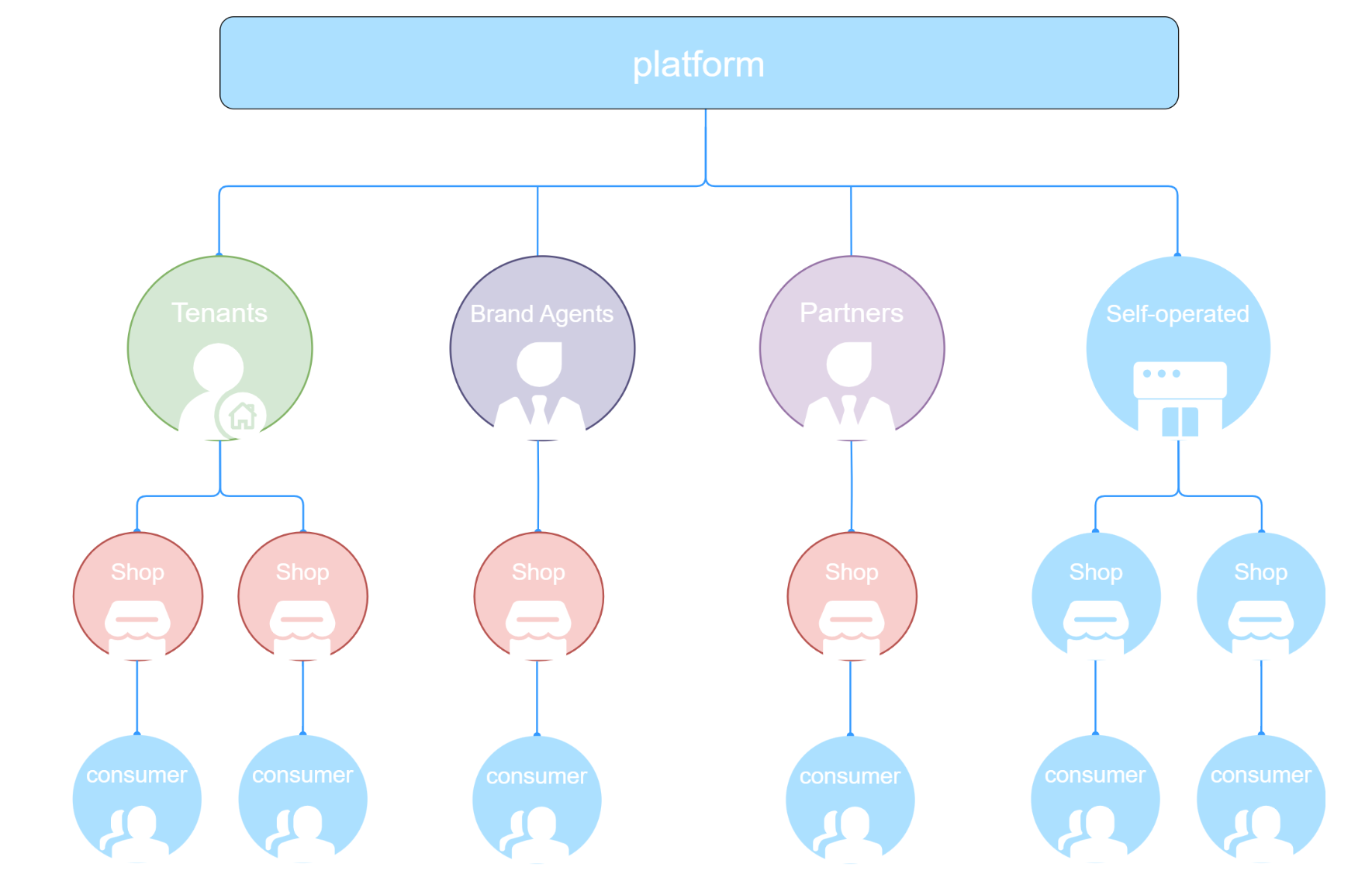
Before exploring BeikeCloud, it helps to define the essential requirements of a SaaS e-commerce platform:
-
Multi-tenant data isolation
Each merchant has an independent administration panel and data space. Products, orders, and customers are completely isolated from one another. -
Self-service store creation in seconds
Once merchants register, they can create and launch a store immediately, without purchasing servers or completing a complicated installation. -
Centralized platform control
Platform operators can manage every tenant from a master dashboard—review merchant status, change subscription plans, and manage billing records. -
Diversified revenue streams
Support charging monthly or annual subscription fees, taking a commission on order value, and billing for value-added plugins. -
Strong control and extensibility
Code and data are privately deployed on your own servers, enabling flexible secondary development without being constrained by third-party platform rules.
2. BeikeCloud Architecture and Positioning
Built on BeikeShop's open-source ecosystem, BeikeCloud is a fully open-source, privately deployable SaaS independent-store platform designed to help service providers and entrepreneurs quickly build their own “Shopify-like platform.”
Core design principles:
- Fully open-source and privately deployed: The system code is open for secondary development, while source code and data are deployed privately, keeping control in your hands.
- Tenant store creation in seconds: Built on BeikeShop's open-source foundation, the platform can generate an independent site for customers as soon as they register.
- Multi-account, multi-tenant architecture: The platform can onboard merchants; each tenant has an independent storefront, back office, and data, while the master dashboard has global management permissions.
- Seamless ecosystem integration: Integrate the extensive range of plugins in BeikeShop's official marketplace to offer merchants diverse value-added services.
3. Core Features and Revenue Models
1. Multi-Tenant Management and Self-Service Store Creation
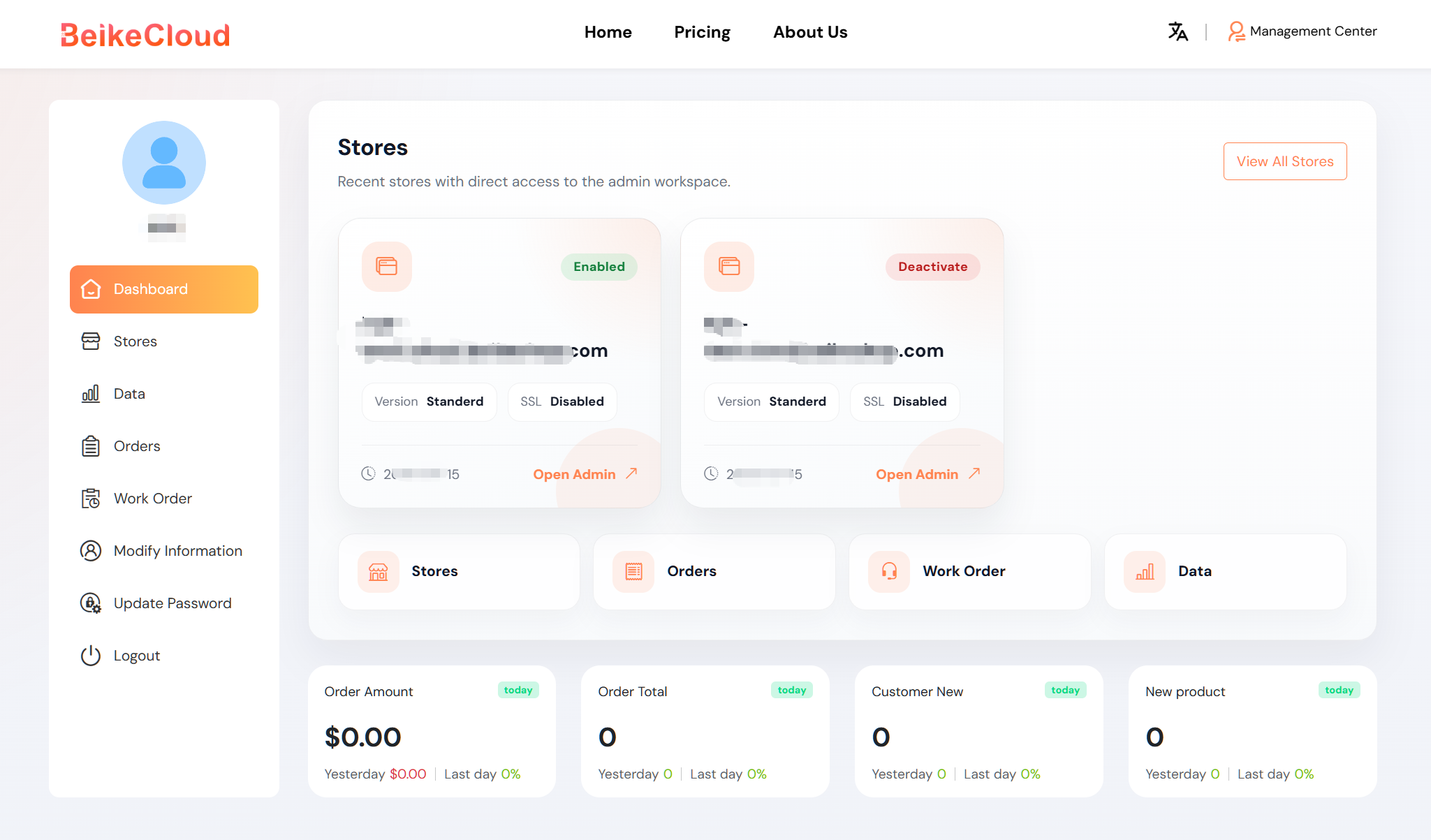
After joining the platform, merchants can easily create and operate stores:
- Deployment in seconds: After registering and selecting a plan, merchants automatically receive an independent storefront and back office.
-
Independent domain binding: Configure a subdomain such as
store.yourplatform.com, or let merchants bind their own top-level domain, such aswww.merchant.com. - Independent back-office permissions: Merchants have their own product management, order processing, customer CRM, and marketing configuration capabilities.
2. Flexible, Diverse Revenue Models
BeikeCloud gives platform operators several monetization paths to support sustainable operations:
- Subscription plans: Set monthly or annual plans—for example, Basic, Professional, and Advanced—and charge a recurring platform service fee.
- Order commissions: Flexibly set a commission rate for each merchant order and earn an ongoing share of customer transactions.
- Value-added plugins and services: Package advanced capabilities from the BeikeShop plugin marketplace, such as AI tools, marketing plugins, and specific payment integrations, as paid value-added services.
- Custom development and managed services: Offer large customers dedicated theme customization, domain procurement, operations management, and other extended services.
3. Unified Operations from the Master Dashboard
Platform operators have a complete, top-level view to manage the business independently:
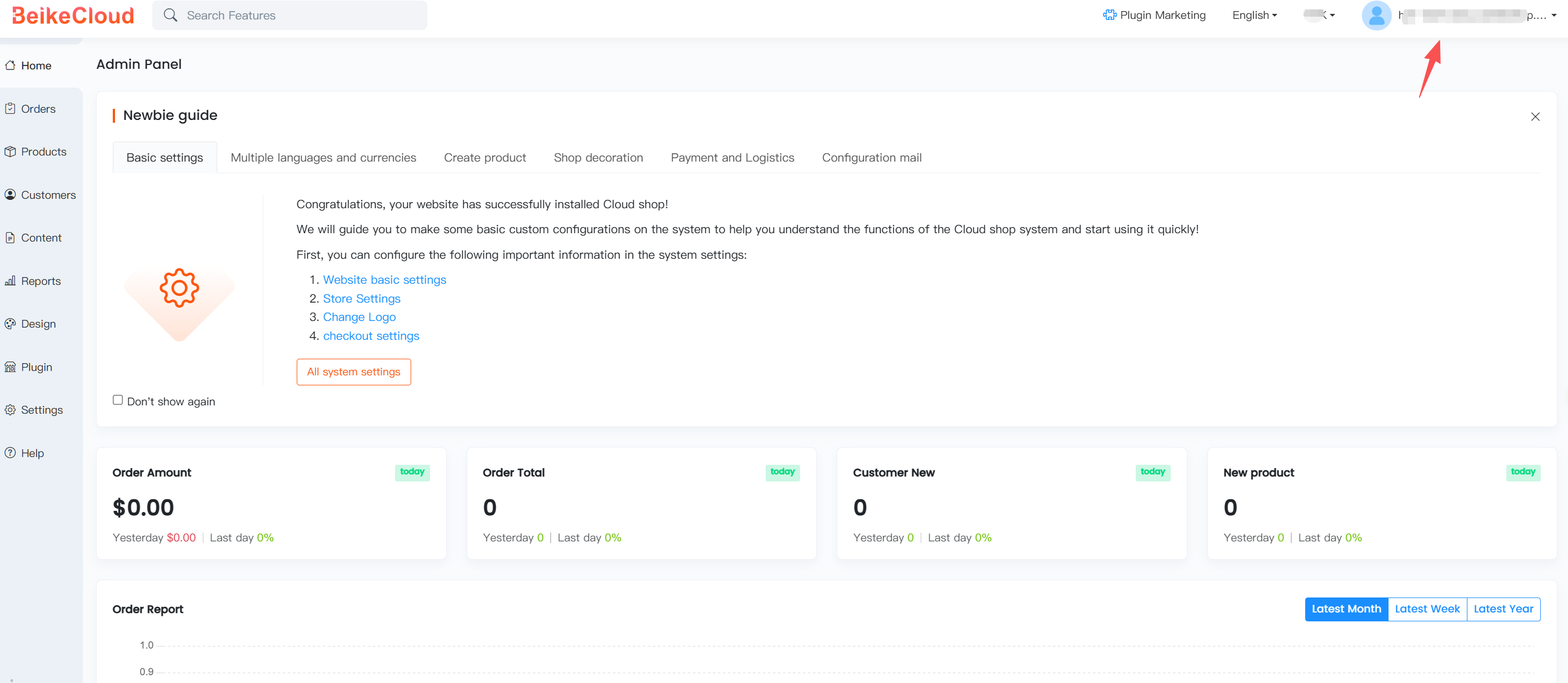
- Tenant lifecycle management: View detailed information, store status, and expiration dates for every merchant.
- Plans and billing: Adjust tenant plans flexibly and process renewals and top-up invoices.
- System operations and configuration: Centrally configure platform-level payment gateways, email services, and baseline rules.
4. Native Internationalization
BeikeCloud is built with cross-border e-commerce in mind:
- Native multilingual and multi-currency settings make it easy to serve markets in different countries and regions, helping tenants sell globally.
4. Typical Use Cases
Scenario 1: Cross-Border E-commerce Service Providers
- Business model: Provide one-stop store-building and managed services for sellers expanding overseas.
- BeikeCloud solution: Build your own SaaS store-building brand with BeikeCloud, offering customers more cost-effective, customizable independent-store services than Shopify, and charge annual subscriptions and commissions.

Scenario 2: SaaS E-commerce Entrepreneurs
- Business model: Create a “Shopify/Shopline” for a specific vertical industry or regional market.
- BeikeCloud solution: Use BeikeCloud to launch quickly, onboard industry merchants, and validate the business model through low-entry subscriptions plus order commissions.
Scenario 3: Industrial Clusters and E-commerce Parks
- Business model: A local government, association, or park operator helps resident businesses digitize.
- BeikeCloud solution: Provide hundreds of manufacturers in the park with shared SaaS e-commerce infrastructure, unified domains, and services, lowering the barrier to entering overseas markets.
5. BeikeCloud Compared with Traditional Approaches
| Dimension | BeikeCloud Private SaaS Platform | Build a SaaS Platform from Scratch | Resell a Third-Party SaaS Platform, such as Shopify |
|---|---|---|---|
| Development cost | Very low (powered by an existing open-source ecosystem) | High (million-level R&D investment) | None |
| Deployment timeline | Launch in 1–2 weeks | 6 months–1 year | Immediate |
| Code and data | Fully private (99% of the source code is open) | Fully controlled | Owned by the third-party platform |
| Revenue autonomy | Full autonomy (set your own subscriptions and commissions) | Full autonomy | Only modest reseller commissions |
| Customization flexibility | High (extend and develop as needed) | Highest | Very low (limited by platform APIs) |
| Operations and upgrades | Low cost (supported by the BeikeShop ecosystem) | Very high (requires a long-term maintenance team) | None |
| Best suited for | Service providers, SaaS entrepreneurs, industrial parks | Well-funded market leaders | Small intermediary service providers |
6. Platform Launch and Operating Process
-
Deploy the BeikeCloud platform
Privately deploy BeikeCloud to your own server, then configure the primary domain and wildcard DNS records. -
Set business rules and plans
Configure subscription tiers in the master dashboard, including monthly or annual prices and transaction commission rates. -
Open merchant onboarding
Enable front-end registration and store-creation entry points. Merchants register and select the plan that suits them. -
Generate independent sites automatically
Once registration is complete, the system creates the merchant's store in seconds. Merchants can log in to their independent back office to add products and configure payments and logistics. -
Generate continuing platform revenue
Collect monthly or annual subscriptions, automatically take commissions from orders, and earn additional revenue through the plugin marketplace.
7. Frequently Asked Questions
Q: What is the difference between BeikeCloud and the BeikeShop multi-store management system?
A: They have entirely different purposes:
- Multi-store management system: Designed for a single merchant or company to manage dozens of independent sites under its ownership. It focuses on cross-site bulk product publishing and unified order processing.
- BeikeCloud: A SaaS platform engine for building a Shopify-like platform that onboards multiple third-party merchants who pay to open stores. It focuses on tenant management, subscription plans, and order commissions.
Q: How open is the system code?
A: BeikeCloud is developed on the Laravel framework. Its code is highly open, making it easy for technical teams to perform secondary development and extend features according to business needs.
Q: Is there a limit to the number of merchant sites that can be created?
A: In theory, there is no limit. The practical capacity depends mainly on your server configuration, and server resources can be upgraded smoothly as your tenant base grows.
Conclusion
BeikeCloud gives cross-border e-commerce service providers and SaaS entrepreneurs a low-cost, highly controllable, independently monetizable private SaaS store-building platform solution.
With source code in hand, private data, and the freedom to charge subscriptions and commissions, BeikeCloud is an ideal starting point if you are planning to build your own SaaS e-commerce platform.
Welcome to contact us! Email: marketing@guangda.work
Click the link to learn about the product: https://beikeshop.com/
All rights reserved. Reprint must indicate the source!